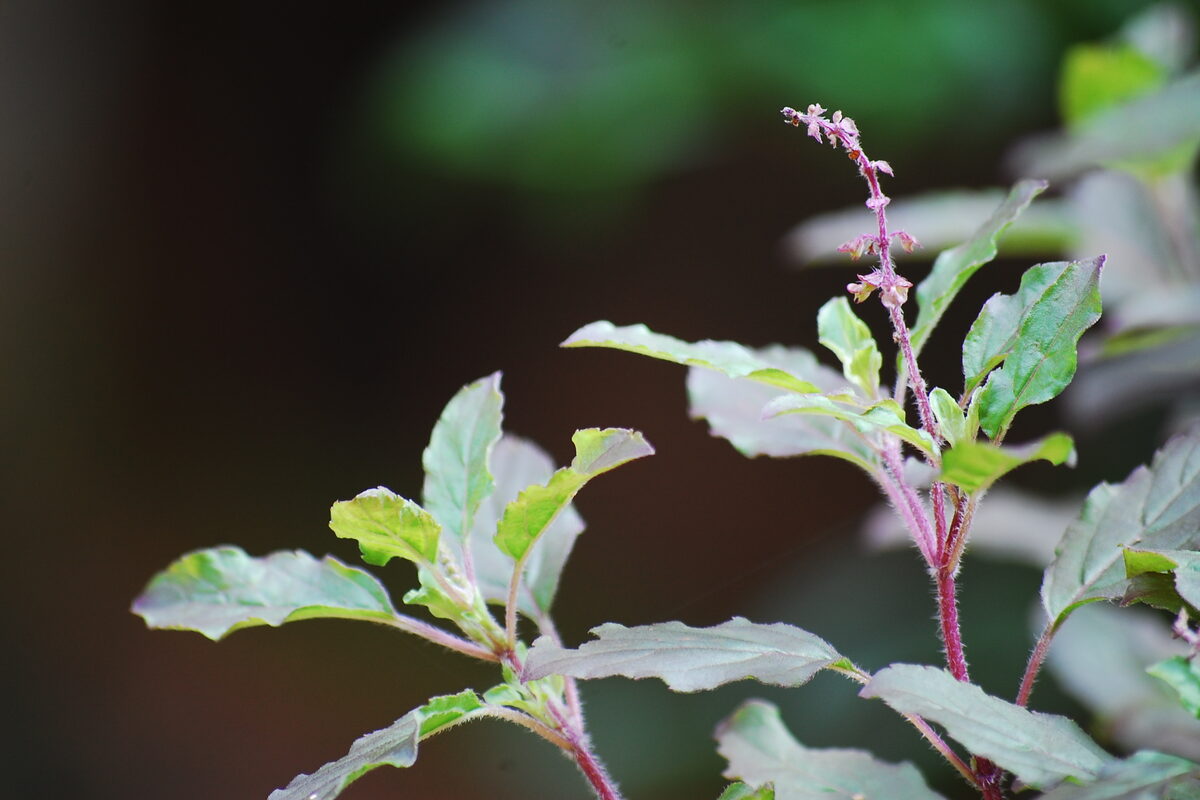
Holy basil, or Tulsi, has been used in Ayurvedic medicine for thousands of years and is often described as an adaptogenic herb, traditionally used to support resilience and balance during periods of stress.
What I find particularly interesting about Tulsi is the way it sits at the intersection of stress, inflammation and the nervous system.
There is some emerging research looking at its antioxidant, anti-inflammatory and stress-related effects, although I think we need to be careful about turning promising research into definitive claims.
You may also see Tulsi discussed online in relation to histamine, but this is an area where I would be cautious. There is interesting preclinical research around its anti-inflammatory and mast-cell-related properties, but that doesn’t mean we can confidently say that Tulsi is a proven treatment for histamine intolerance or that it will lower histamine in everyone.
This is something I think is important with herbal medicine generally.
The goal isn’t to find the one perfect herb that fixes everything.
It is about understanding the person, their symptoms, their medications, their nutritional status, their nervous system and what is actually happening in their body, then choosing the right tools for that individual.
Sometimes the most powerful approach is not adding more.
It is understanding what your body actually needs.