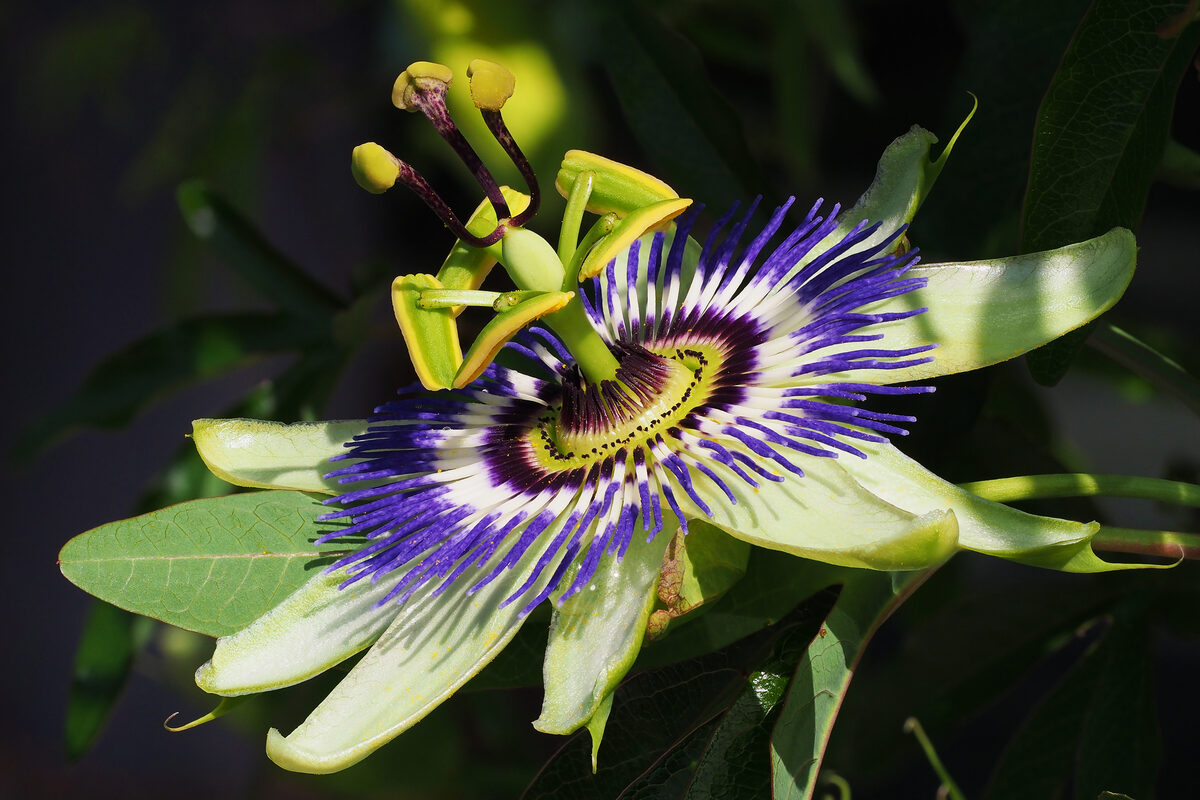
Passionflower is one of my favourite traditional herbs to think about when we are talking about the relationship between the nervous system, sleep and mood.
It has traditionally been used as a calming herb, and modern research has explored its effects on anxiety and nervous system activity, with some evidence suggesting it may have a gentle calming effect.
What I find particularly interesting is the relationship between feeling calm and actually being able to recover.
When your mind is constantly racing, your body can struggle to properly switch off at the end of the day, and over time this can affect sleep, energy, mood and resilience.
Sometimes supporting mental health isn’t about trying to feel more energised. It is about being able to rest.
Sometimes supporting mental health isn’t about trying to feel more energised, it is about helping the nervous system move out of constant alertness so that you can actually rest.
Passionflower is one of those beautiful examples of how traditional herbal medicine and modern research can meet, and it is an ingredient I like to consider as part of a broader approach to nervous system and emotional wellbeing.